

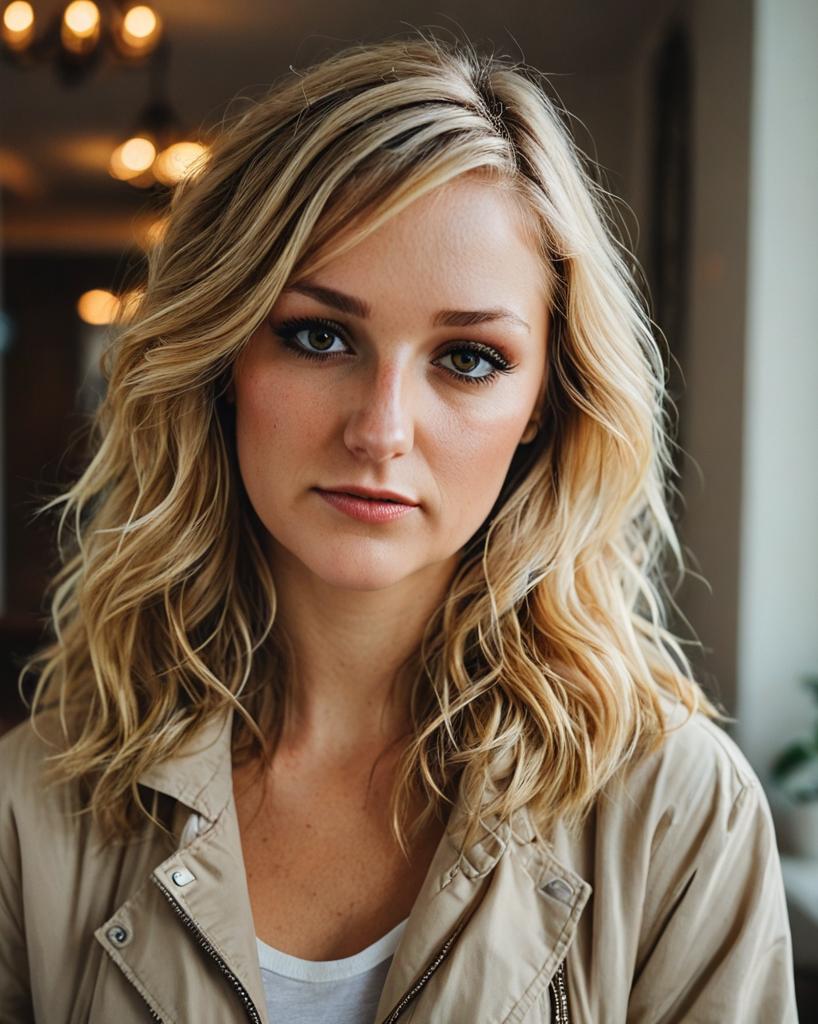

I remember walking into my first architecture lecture, feeling like I’d accidentally stepped into someone else’s dream. The room was full of ideas, blueprints, and a sea of faces that didn’t look like mine. It’s a quiet loneliness, wondering if you belong in the spaces you’re learning to design. For Katherine Serrano Sosa, that feeling was a familiar companion. As a Latina in a field where only about 3% of licensed architects share her heritage, her path was never a given. It was a choice, built line by stubborn line.
She started Rooted Architecture Studio in 2021. This was during a tough time for the industry. A recent survey shows firms face lower billings and hesitant clients. Construction costs are climbing. Yet, Katherine’s story isn’t about barriers. It’s about building bridges. Her firm is now tackling a major commercial project in her hometown of Glen Cove. More importantly, she’s guiding others. “I did not see anyone that looks like me,” she says. “I like sharing my story. What if it helps that one person?”
The numbers tell a stark story. About 60% of licensed architects are white men. The pipeline is diversifying, though. Half of current licensure candidates are women. Half are people of color. But the journey is arduous. Financial pressure and a lack of support cause many to leave. Graciela Carrillo, the first Latina president of AIA Long Island, notes the dropout rate. It’s higher for women. She sees mentorship as the key. “If you don’t have anybody in your immediate circle,” Carrillo explains, “you don’t see that representation.”
Katherine’s own blueprint was drafted early. She emigrated from El Salvador at seven. Her father was a contractor. She’d accompany him to job sites. She wanted to learn construction herself. But the machismo in her family said no. Her younger brother could learn. She could not. Her response was pure determination. “My brain in that time was like, ‘If I can’t do it, I’m going to tell you what to do.’ So I’m going to be an architect.” She fought to keep an architectural drafting class in high school. She earned a full scholarship to City College.
The degree was a test of will. Early design studios felt alienating. Professors asked for abstract thinking. “Define a threshold using this block of wood.” She wondered, “I don’t know if I’m cut out for this.” The path is famously time-intensive. Jasmin Roussos, a 29-year-old architect from Queens, understands. She’s preparing for her licensure exams now. She looks to Katherine as a mentor. “Architecture doesn’t allow you to work and study full time,” Roussos says. For many children of immigrants, that’s a luxury they can’t afford.
Katherine worked for several firms before branching out. She launched her company as a side business in 2021. She left her full-time job in 2023. Her mission was clear. She wanted to use design for wellness. She wanted to serve Latino communities. Her first project was a kitchen addition for a Salvadoran family. They wanted to contain cooking smells. She didn’t just draw the plans. “I taught him how to read drawings,” she recalls. “Then he and his friend built that space.” Now she works on everything from homes to a 42,000-square-foot lighting factory renovation.
The economic headwinds are real. A chief economist at the American Institute of Architects cites higher interest rates. Tariffs and immigration policies strain costs and labor. For small firms, demand is unpredictable. Katherine’s focus cuts through the noise. She helps Spanish-speaking clients navigate a maze of local regulations. She helps them avoid costly code violations. “I wanted to be the voice that helped the Latin community,” she says. She expanded to other minority communities who feel unheard in design.
Her mentorship work is perhaps her most foundational project. She’s a member of Arquitina. This organization creates opportunities for young Latina architects. When it started in 2020, just 1% of architects nationwide were Latina. That number has since grown to 3%. Progress is being measured, one person at a time. After Katherine blitzed through her licensure exams in just ten months, Carrillo encouraged her. She told Katherine to compile a guide. Carrillo now sends that guide to dozens of aspiring architects. “They don’t know how to start the process,” Carrillo says. “I send them the guidelines that Katherine put together.”
This is how change is built. Not with grand gestures, but with passed batons. Georgi Ann Bailey of AIA New York champions their mentorship programs. She says it’s about learning the profession from someone on the journey. It makes the abstract concrete. Carrillo sees the ripple effect in Katherine’s work. “Now Katherine is mentoring other people,” she observes. “They’re going to start mentoring others. That’s how you continue just passing the baton.”
It makes me think about the spaces we inhabit. Who gets to decide their shape? Their function? Their beauty? Katherine Serrano Sosa is redrawing the lines. She’s not just creating buildings. She’s building a legacy of access. She’s proving that representation isn’t just about seeing yourself in a room. It’s about holding the door open for the person behind you. What door have you held open today?
- Overcoming barriers in architecture
- Importance of representation
- Role of mentorship
- Value of community focus
- Challenges in the industry
- Building a legacy
| Factor | Statistic |
|---|---|
| Percentage of White Men in Architecture | 60% |
| Percentage of Women Licensure Candidates | 50% |
| Percentage of People of Color Licensure Candidates | 50% |
| Percentage of Latina Architects in 2020 | 1% |
| Percentage of Latina Architects in 2023 | 3% |
| Katherine’s Licensure Exam Duration | 10 months |


